



Osteochondrosis today is rightfully considered a "disease of the century", because most often it affects people whose work does not require increased physical activity.
In most cases, changes in cartilage and bone tissue are observed in people of working age - up to 40 years.
The disease can affect different parts of the spine, and the second most common is osteochondrosis of the cervical spine.
What is it?
Osteochondrosis is a degenerative disorder of the articular cartilage and adjacent bone tissue.
Previously, the term was applied to a large group of osteoarticular diseases, but now it is used only for degenerative diseases of the spine.
Compared to other parts of the spine, the cervical region is the most mobile and has many nerve and vascular formations. The structure of the vertebrae is small in size, as well as in the fact that they are surrounded by a rather weak muscle corset.
Such anatomical structure predisposes to the development of osteochondrosis, the severity of clinical manifestations of which depends on the nature of changes in the intervertebral discs and the degree of their destruction.
The reasons for the development of the disease
The main and most common cause of osteochondrosis of the cervical spine is a sedentary lifestyle.
Due to lack of physical activity with a sedentary and sedentary lifestyle:
- metabolic processes are disturbed;
- the level of salts in the bloodstream and lymphatic fluid increases;
- Salts are deposited in the cervical spine, kidneys and liver.
Damage to the cervical vertebrae is caused mainly by a lack of nutrients in the intervertebral discs. Therefore, the main reasons for the occurrence of cervical osteochondrosis also include improper and unbalanced nutrition.

Risk Factors
There are many risk factors for cervical osteochondrosis.
The most common factors are:
- heredity;
- age-related changes;
- cervical spine injuries;
- hypothermia;
- hormonal disorders that lead to metabolic disorders;
- some autoimmune diseases that damage cartilage tissue (systemic lupus erythematosus, rheumatism).
Why is it dangerous?
Not only the spinal cord and nerve roots pass through the cervical spine, but also the vertebral artery, which is responsible for supplying blood to the back of the brain, medulla oblongata and cerebellum.
Therefore, with cervical osteochondrosis, this artery is squeezed, and as a result, cerebral circulation is impaired.
In extremely advanced cases, compression of an artery and adjacent blood vessels and nerve plexuses can lead to such consequences as:
- lack of coordination;
- loss of hearing and vision;
- stroke.
If the disease is not cured at the initial stage, it can lead to such complications as: protrusion of the intervertebral disc or herniated disc.
Degrees of disease development
Cervical osteochondrosis, like osteochondrosis of other parts of the spine, develops in stages. There are 3 stages of the development of the disease.
1 degree
Characterized by the onset of destruction of the intervertebral discs.
Cracks form in the annulus fibrosus, the strength and elasticity of the disc is disturbed, its height decreases, due to which the nerve roots are compressed.
Characteristic aching pain appears. Sometimes at stage 1 (preclinical) such pain may be absent, and osteochondrosis proceeds with moderate discomfort in the neck.
2nd degree
If osteochondrosis of the 1st degree was not treated or the treatment was not effective, then a chronic condition arises, which is the 2nd degree of osteochondrosis.
The pain becomes constant, the destruction and compaction of the intervertebral disc continues and leads to minor dislocations of the cervical vertebrae.
With cervical osteochondrosis at this stage, falling head syndrome may develop. This syndrome is characterized by severe pain, and the person has to keep the head in a fixed state to reduce the pain.
3rd degree
Cervical osteochondrosis of grade 3 is accompanied by the following symptoms:
- headaches;
- nausea;
- dizziness;
- neck "lumbago";
- impaired sensitivity of the upper limbs.
The annulus fibrosus is almost destroyed, which leads to complications of osteochondrosis - protrusion of the intervertebral disc or intervertebral hernia.
At stage 3 of osteochondrosis, the intensity of pain may decrease, since the affected cartilaginous tissue in the intervertebral disc simply does not exist, which means that there is no source of pain, but the pinching of the nerve roots remains, so the pain does not completely go away.
Signs and Symptoms
There are many signs of this disease. And they depend on which vertebrae are damaged by this disease.
Typical syndromes in cervical osteochondrosis are:
- radicular syndrome;
- vertebral artery syndrome;
- cervical migraine syndrome;
- hypertensive syndrome.
All these syndromes are accompanied, first of all, by different types of pain.

If we consider the vertebral artery syndrome, then the headache is manifested here already at an early stage of the development of the disease.
In this case, pain attacks may be accompanied by:
- dizziness;
- unsteady gait;
- visual symptoms (the appearance of fog before the eyes, decreased visual acuity, etc. ). fainting (with sudden head movements).
In hypertensive syndrome, increased intracranial pressure is determined.
The headache is more of a bursting character, may be accompanied by nausea and vomiting. With an exacerbation of cervical osteochondrosis, an increase in temperature and an increase in ESR may be observed.
When the spinal roots are compressed ("radicular syndrome"), the following neurological symptoms may appear:
- severe pain in the neck (cervicalgia);
- neck pain that spreads to the forearm and humerus (cervicobrachialgia);
- pain in the arm;
- cracking or cracking sensations in the neck when turning the head;
- pain "radiating" to the ear, which occurs most often after a long stay in an uncomfortable position or a sudden movement;
- pain or feeling of a lump in the throat, breathing problems;
- numbness of hands and tongue;
- feeling of swelling of the tongue;
- severe weakness;
- hearing and visual impairment;
- tinnitus;
- general deterioration of health.
In the syndrome of "cervical migraine", irritation of the sympathetic nodes is observed, which leads to impaired reactivity of the cerebral vessels and impaired blood circulation.
As a result, hypertension may develop, often accompanied by:
- stuffy ears;
- tachycardia;
- noise in the head;
- ringing in the ears.
When the arteries supplying the spinal cord are compressed, a spinal stroke can occur.
Impaired blood circulation in the brain in osteochondrosis can lead to:
- oxygen deficiency of brain cells;
- mental disorders (depression, panic attacks);
- signs of epilepsy, such as short-term loss of consciousness and tension of the whole body - they are often confused with signs of epilepsy.

A very common sign of cervical osteochondrosis is changes and disturbances in the rhythm of the heart, for example, extrasystole or arrhythmia.
These symptoms are very common among drivers and office workers.
Due to a sedentary lifestyle, changes occur in the intervertebral discs of the cervical and thoracic spine, which lead to disturbances in the work of the heart.
In most cases, until osteochondrosis is cured, it is virtually impossible to get rid of heart rhythm disturbances.
Swelling under the eyes can also indicate osteochondrosis of the cervical spine.
Most often they depend on the position of the head during a night's sleep, disappear during the day and are combined with headaches, dizziness, heaviness in the head, etc.
Vegetovascular dystonia is another of the most common diseases that occur with this disease.
It is a consequence of pinched vascular arteries that run along the sides of the spinal column.
Diagnostic methods
The preliminary diagnosis is established by a neurologist during the initial examination of the patient. More recently, the doctor had to make a diagnosis by conducting only an external examination of the patient and sending him for an X-ray.
But, unfortunately, it is impossible to see the full picture of the development of the disease on an X-ray.
Currently available such examinations as computed tomography and magnetic resonance imaging, with which you can fully assess the stage of development of the disease.
Once the diagnosis has been made, the patient is referred to a doctor who specializes in the field.
Which doctor is treating?
Treatment is carried out by a narrow specialist - a vertebrologist or a vertebroneurologist.
Treatment of cervical osteochondrosis
The severity of the main clinical symptoms is taken as the basis for the treatment of cervical osteochondrosis.
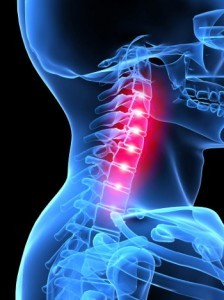
In the cervical spine, symptoms are mainly associated with squeezing of blood vessels and nerve endings, therefore, during treatment, edema is first of all removed and blood circulation restored.
There are many treatment methods used in the treatment of cervical osteochondrosis.
The most effective treatment is complex, which is a combination of several conservative treatment methods.
Complex treatment of cervical osteochondrosis can include the following traditional and non-traditional methods: drug treatment, massage, acupressure, manual therapy, physiotherapy, acupuncture, homeopathy, folk remedies, etc.
The main stages of treatment for osteochondrosis are the same for all localizations of this disease:
- First you need to relieve pain.
- Then the edema will be removed.
- At this stage, it is necessary to normalize blood circulation.
- Strengthening the muscle corset.
- Improving nutrition and tissue regeneration.
Only a team of good specialists can choose the most suitable therapy, which includes a neurologist, physiotherapist, massage therapist, surgeon, and vertebral neurologist.
Like any disease, cervical osteochondrosis should be treated at the earliest stage of its onset. If you do not start the process, then at this stage you can achieve a complete cure of osteochondrosis.
Unfortunately, stages 2 and 3 of cervical osteochondrosis are accompanied by complete or partial destruction of the intervertebral discs, therefore, these stages are characterized by a very long recovery process.
First Aid
How to relieve pain during exacerbation?
In case of severe pain, you need to take a pain reliever from your home medicine cabinet: these can be analgesics. You can also apply pepper plaster for pain.
Diuretics can be taken if swelling occurs. Rubbing the neck with pain-relieving ointments may help.
You can also use aneedle applicatorfor pain, which:
- relieves back pain;
- reduces muscle spasm;
- stimulates the work of internal organs;
- normalizes blood circulation.
Physiotherapy in exacerbations is contraindicated, as well as warming up, since these effects can cause serious complications.
After the relief of acute pain, it is necessary to urgently consult your doctor for advice.
Medication Treatment
Treatment with medicines most often begins with injections (in case of exacerbation), then switch to tablets and suppositories in combination with topical application of ointments and gels.
Anesthesia during drug treatment is performed with steroid anti-inflammatory drugs.
It is imperative to prescribe drugs that restore cerebral circulation.
Muscle relaxants may be prescribed for abnormal muscle tension. For a more effective treatment, vitamins are taken in a therapeutic dose and trace elements.
In cases of intervertebral hernia, surgical intervention is often recommended and the attending physician may suggest surgery.
Massage and self-massage
This method works well with physical therapy and physiotherapy. You can take a massage course both in any medical institution and by contacting private practices.
Massage is necessary for cervical osteochondrosis to strengthen muscles and to relieve tension in the neck.
The task of the masseur is to remove harmful metabolic products by increasing the outflow and inflow of blood in the diseased area, as well as to remove the spasm from the pathology area.
The main techniques used by specialists in neck massage are:
- stroking;
- squeeze;
- rubbing;
- vibration;
- kneading.
The self-massage technique can be performed using the following techniques:
- stroking (movements should be soft, without much effort, forming folds)
- kneading (deep impact on the muscles, by gripping in the fold, pressing and pushing);
- vibration (vibrational impact by beating, shaking, tapping).
Self-massage should always be finished with stroking. During vibration, you can use a massager.

Acupressure massage
Acupressure massage relieves headache well with exacerbation of cervical osteochondrosis, helps with pressure surges, normalizing it.
Scheme of acupressure:
- Impact on the feng fu point, which is located under the occipital protuberance, for 1 minute.
- Impact on the feng chi point, which is two fingers wide from the mastoid processes of the skull.
- Impact for 1-1. 5 minutes on the ya-men point (located at a distance of three fingers from the feng fu point).
- Sedation 1-1. 5 minutes on the da-chzhui point (7th cervical vertebra).
After the acupressure, you need to lie down for a few minutes, as you may experience slight dizziness.
Manual therapy
Manual therapy helps to cope with both acute and chronic pain, also increases the range of motion and improves posture well.
The main methods of manual therapy for osteochondrosis of the cervical spine:
- Relaxing and segmental massage.Used to warm up muscles and relieve tension.
- Mobilization.Influences aimed at restoring joint function by traction.
- Manipulation.A sharp push directed at the pathological areas of the patient. The procedure is accompanied by a characteristic crunch (return of the joint to its normal position).
A specialist practicing manual therapy should be fluent in these techniques. Otherwise, any mistake can lead to injury.

Acupuncture
Acupuncture promotes the release of cortisol into the bloodstream. This hormone has a pronounced anti-inflammatory effect.
Acupuncture is performed by acting on points near the inner edge of the scapula. The needles are inserted to a depth of 1 to 2 cm and left to act for 10 to 30 minutes.
Homeopathy
Drug treatment carries with it many adverse side effects, so homeopathy can be a worthy substitute for treatment without unwanted consequences.
Nutritional Features
Meals should be rich in calcium and magnesium.
These trace minerals are found in fish and seafood, nuts, legumes, and dairy products.
Often, osteochondrosis of the neck can be accompanied by atherosclerosis. In this case, a strict diet is recommended.
The diet is prescribed for 3-4 months. It is necessary to limit the consumption of all foods containing cholesterol. These include animal fats, fatty meats, fatty dairy products, etc. You should also limit or exclude the consumption of salt, sugar, flour products.
It is recommended to give up bad habits (smoking, alcohol, etc. ).
Cervical osteochondrosis and alcohol are interconnected. The fact is that getting into the blood, alcohol destroys cells, thereby aggravating the already impaired blood circulation in osteochondrosis.
Therefore, you should limit it to a minimum, and during an exacerbation, completely stop drinking alcohol.
Disease Prevention
To prevent cervical osteochondrosis, it is recommended to observe the following rules:
- sleep should be on a firm mattress and on a low pillow: the neck flexion angle should not be more than 15 degrees;
- take a hot shower every day for at least 10 minutes;
- visit the sauna and bathhouse as often as possible: heat helps relieve neck spasms;
- give yourself aerobic activity and regular walks at a low pace;
- go swimming;
- after 25 years, avoid shock load on the spine (jumping, running);
- when working sedentary, be sure to take five-minute breaks every hour;
- regular yoga practice can prevent any manifestations of cervical osteochondrosis;
- refrain from going to the gym, as bodybuilding can provoke the occurrence of cervical disc protrusion;
- physical exercise as a prophylaxis against osteochondrosis of the neck helps to strengthen the neck muscles, relieve tension.
Frequently Asked Questions
What to do during pregnancy and how to treat it?
Often, it is during pregnancy that the first symptoms of cervical osteochondrosis occur.

This is due to a change in hormonal levels and softening of the vertebrae, as well as due to a shift in the center of gravity and excessive stress on the spine.
Treatment of osteochondrosis in pregnant women is rather complicated, since it is limited mainly by the drug method aimed at relieving pain.
You can apply natural ointments or resort to traditional medicine.
Any impact on the neck area (warming up, exercising, etc. ) during pregnancy is strictly prohibited.
Does it happen in children and adolescents?
In children and adolescents, cervical osteochondrosis develops as a result of congenital or acquired functional insufficiency of cartilage tissue.
It is expressed by complaints of headache, fatigue, dizziness and fainting.
Is it possible to heat the neck area?
Warming up the neck with cervical osteochondrosis is strictly prohibited, especially in the stage of exacerbation of the disease, since warming up can lead to an increase in edema and vasodilation of the brain.

How to sleep properly?
Sleep on a flat, hard bed with an orthopedic mattress.
The recommended and most comfortable position is lying on your side, with your shoulder resting on the mattress and your head resting on a small pillow.
The use of an orthopedic pillow helps to relax the muscles in the cervical spine, reduces irritation of the nerve endings, which prevents headaches and insomnia.
Are physical activities and sauna allowed?
In preventive measures and at the 1st stage of cervical osteochondrosis, it is recommended to engage in physiotherapy exercises, swimming.
Lifting weights, hard work, training in gyms is strictly prohibited.
A visit to the bathhouse and sauna is also recommended only for the prevention of cervical osteochondrosis and at the initial stage of the disease.
Reviews
"I would like to share with my brothers in misfortune how to deal with cervical osteochondrosis. A couple of years ago I had a back pain. A visit to a doctor, the diagnosis was cervical osteochondrosis. A lot of things have been tried out from the treatment: physiotherapy, manual therapy and massage. But there was always only temporary relief, besides, all these are very expensive procedures. I had to take up the study of the problem thoroughly. And so I decided to try swimming. It turns out that swimming is widely used for the prevention and treatment of cervical osteochondrosis, as it remarkably relieves the tension of the neck muscles. once a week in the pool and grief do not know. "
"Due to my excessive employment, I could not find time to visit a doctor. And my relatives advised me to treat my neck pain with warming up, herbal compresses, ointments in various ways and other home remedies. that the neck stopped moving at all! I lay at home for more than two weeks, and even then it took a long time to recover. Therefore, my advice to everyone is to visit a doctor as soon as your neck crunches and hurts! So you will save time and not lose health. "